How Do I Know If My Child Has Scoliosis?
Many parents are surprised to learn that scoliosis often develops without causing pain. In fact, most children with scoliosis feel completely normal, which means the condition can go unnoticed for months or even years.
Early detection is important because scoliosis tends to progress during periods of rapid growth. Identifying the signs early may allow for more conservative management options and can help reduce the risk of curve progression.
What Is Scoliosis?
Scoliosis is a three-dimensional spinal condition where the spine develops an abnormal sideways curve and rotation. It most commonly appears during childhood or adolescence, especially during growth spurts.
Research suggests that adolescent idiopathic scoliosis affects approximately 2–3% of children and teenagers.
Common Signs Parents Should Watch For
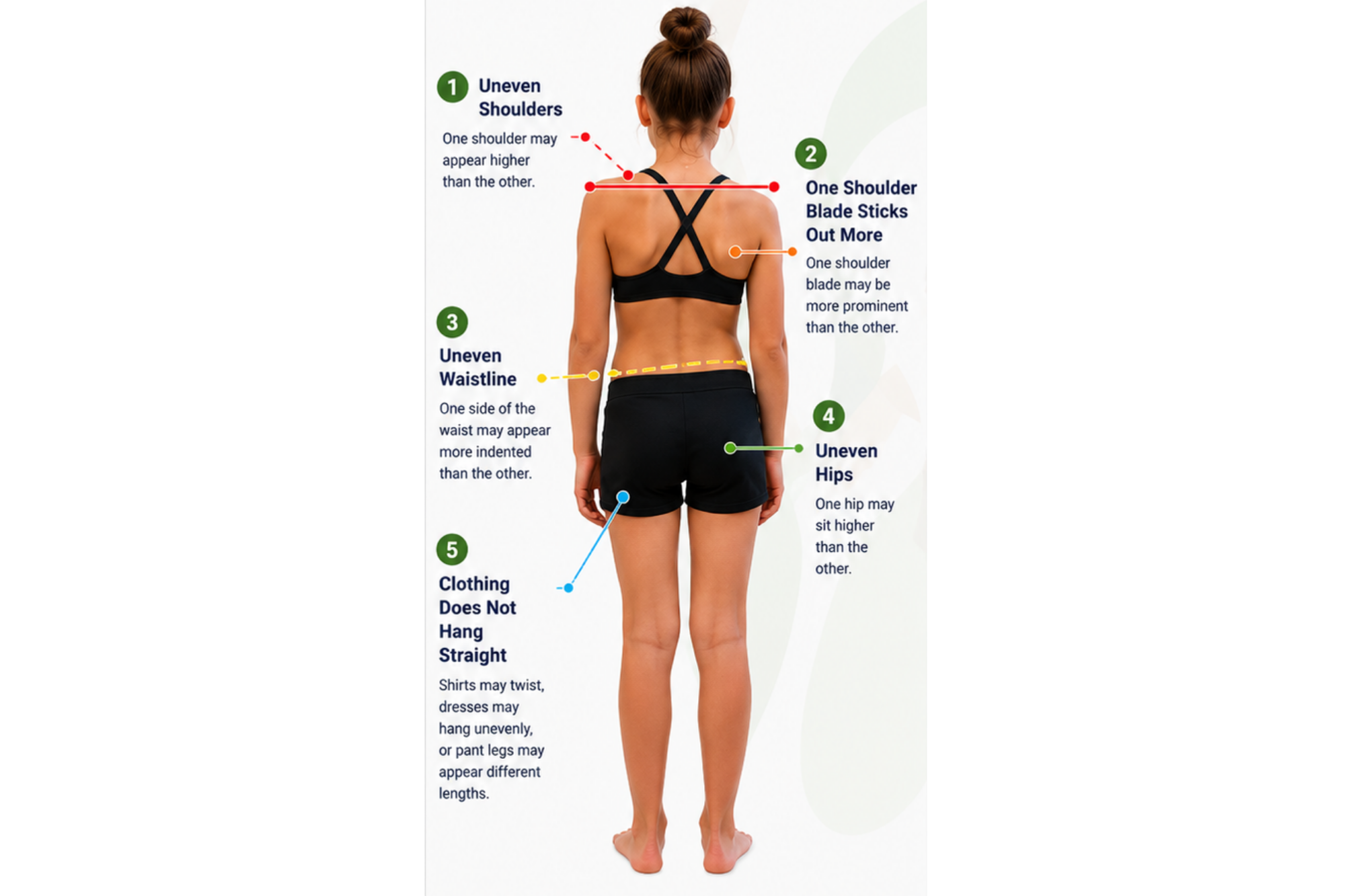
Many signs of scoliosis can be seen when a child is standing naturally.
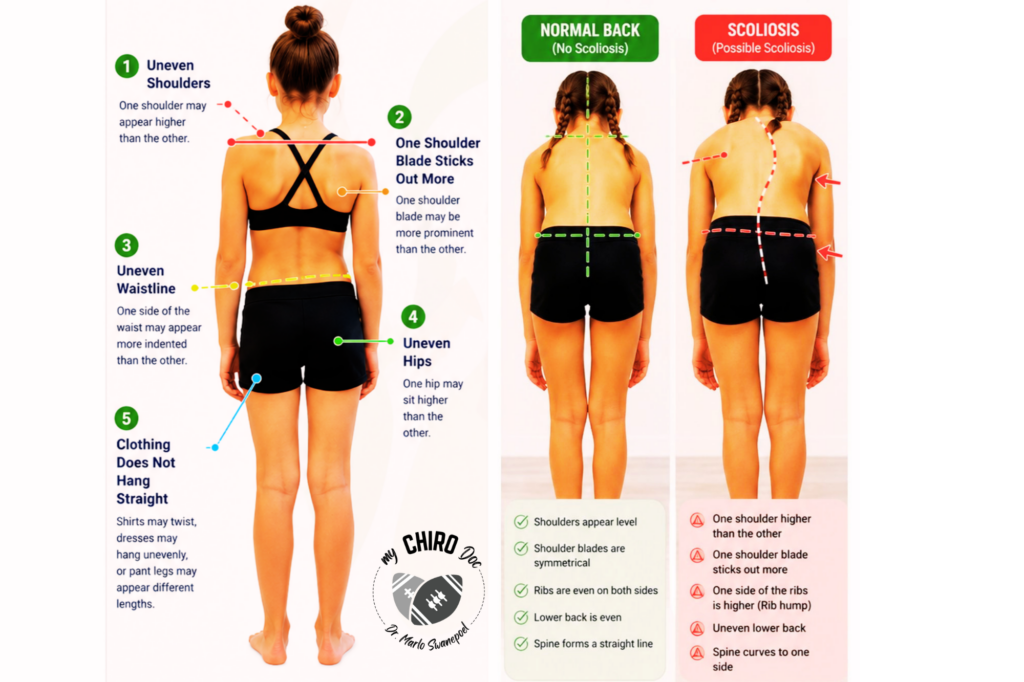
- Uneven Shoulders
One shoulder may appear higher than the other.
- One Shoulder Blade Sticks Out More
The shoulder blades may not sit evenly, with one appearing more prominent.
- Uneven Waistline
One side of the waist may appear more indented than the other.
- Hips That Look Uneven
One hip may sit higher than the opposite side.
- Clothing Does Not Hang Straight
Parents often notice that:
- School shirts twist
- Dresses hang unevenly
- Pants legs appear different lengths
- Rib Hump When Bending Forward
One of the most important signs occurs when the child bends forward.
Due to spinal rotation, one side of the ribs may appear higher than the other. This is often called a “rib hump” and is one of the classic signs of scoliosis.
Does Scoliosis Cause Pain?
Most children with mild to moderate scoliosis have little or no pain.
Because scoliosis is often painless, regular observation and screening become especially important.
Who Is Most at Risk?
Certain factors increase the likelihood of developing scoliosis:
- Family history of scoliosis
- Female gender
- Rapid growth spurts
- Previous diagnosis of spinal asymmetry
Girls are more likely than boys to develop curves that progress and require treatment.
A Simple Home Screening Test
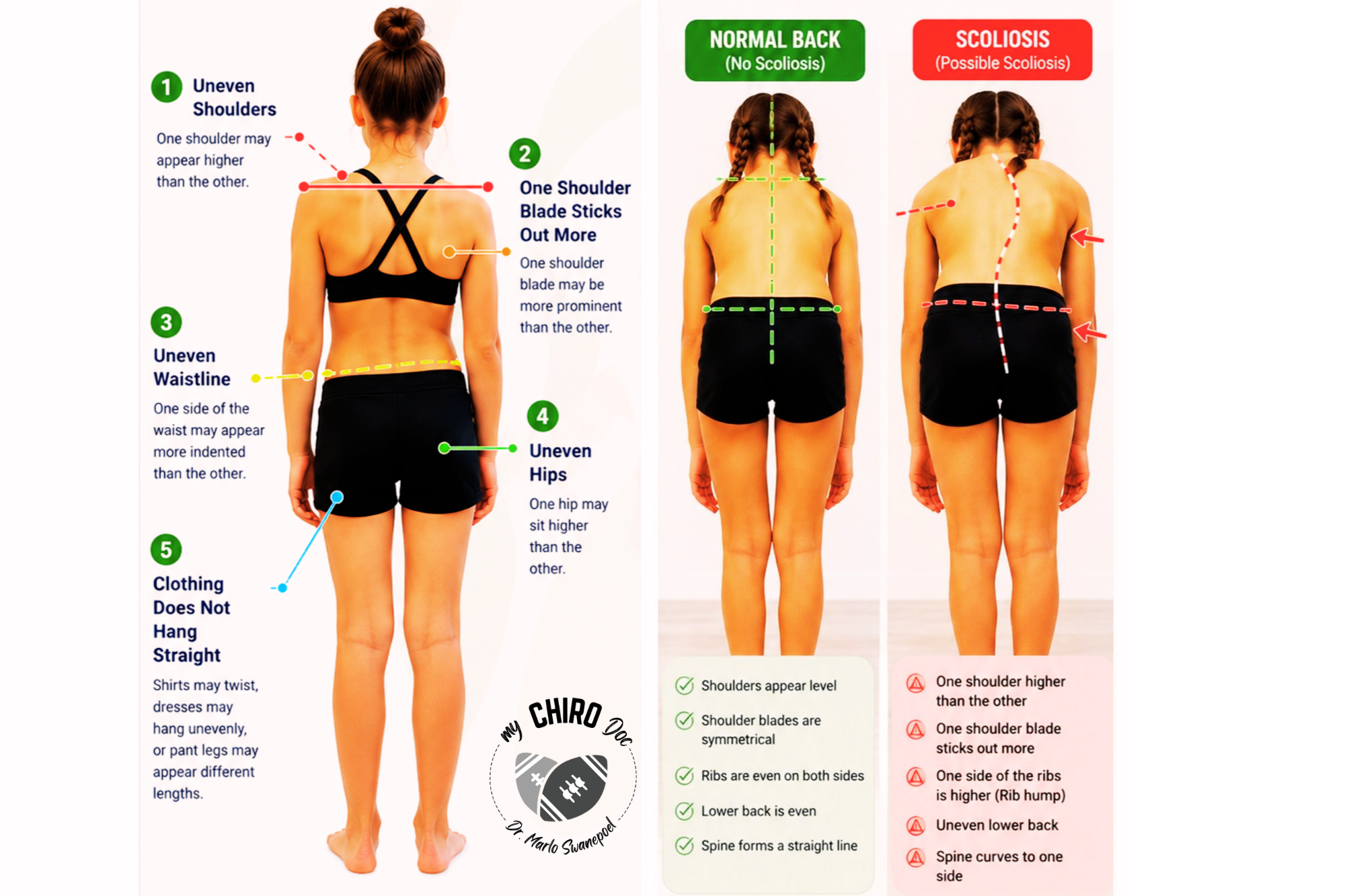
Parents can perform a basic screening test at home.
Ask your child to:
- Stand with feet together.
- Bend forward slowly.
- Let the arms hang naturally.
- Observe from behind.
Look for:
- A rib hump
- Uneven back muscles
- One side of the lower back appearing higher
If you notice any of these findings, a professional scoliosis assessment is recommended.
When Should My Child Be Assessed?
You should consider a scoliosis assessment if you notice:
- Uneven shoulders
- Uneven hips
- A rib hump
- Clothing hanging unevenly
- Rapid changes in posture during growth
Early assessment can help determine whether monitoring, specific exercises, bracing, or referral is appropriate.
Can Scoliosis Be Treated?
Management depends on factors such as:
- The size of the curve
- Skeletal maturity
- Risk of progression
- Age of the child
Treatment options may include:
- Observation and monitoring
- Scoliosis-specific exercises
- Bracing for growing children
- Co-management with orthopaedic specialists when necessary
Research has shown that appropriately prescribed scoliosis-specific exercises and bracing can help reduce progression risk in selected patients.
Final Thoughts
Scoliosis is often called a “silent condition” because many children have no symptoms. The good news is that parents are often the first people to notice subtle posture changes.
If you observe uneven shoulders, uneven hips, a rib hump, or changes in posture, an assessment can help determine whether scoliosis is present and whether any intervention is required.
Early detection remains one of the most important factors in successful scoliosis management.
